Aloha Kitty TNR: Emergency Medical Grant Report


How did this grant help your organization and the pets in your care?
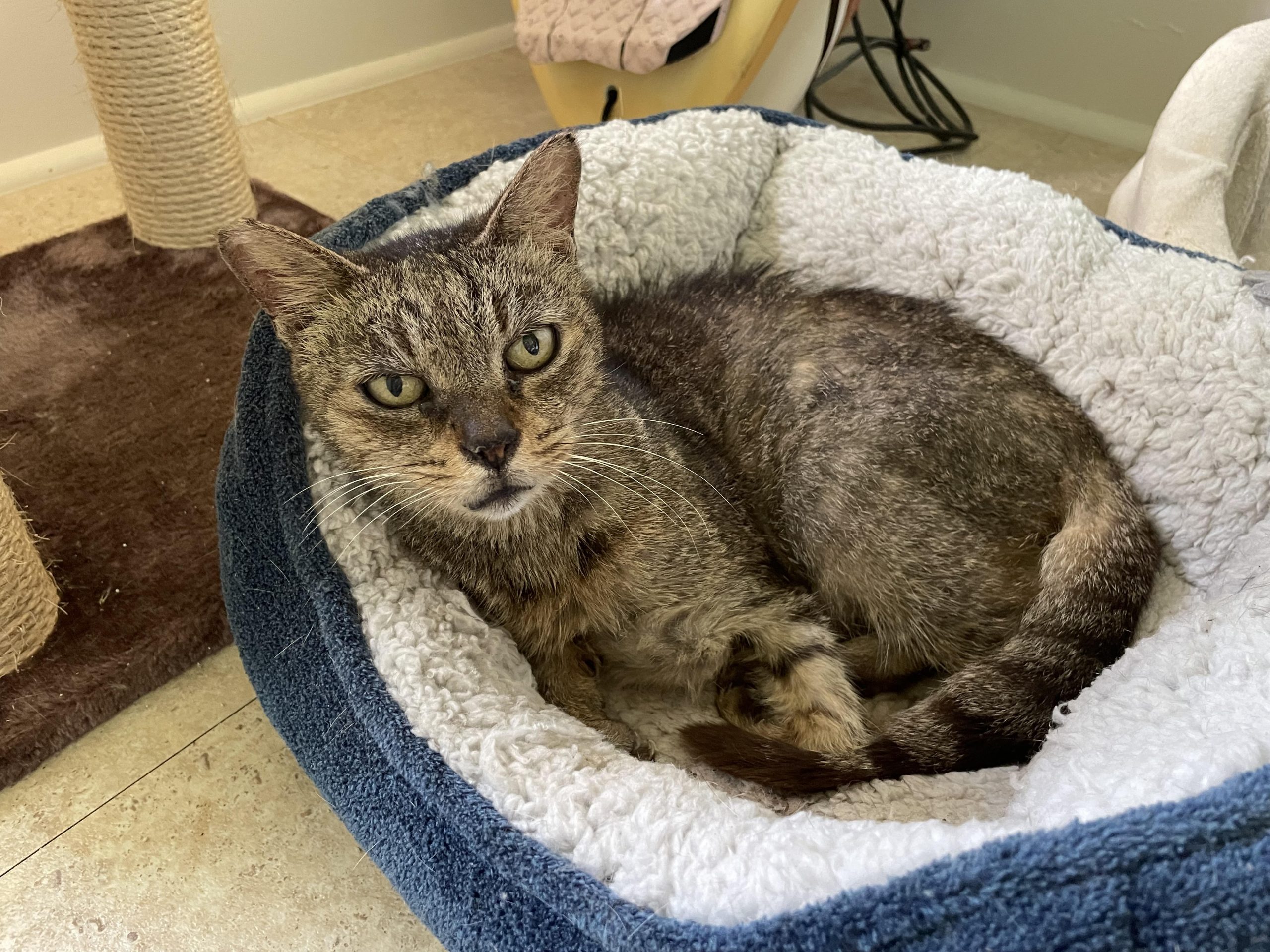
Miranda, a 9-year-old cat, was found abandoned in a housing area near Pearl City on Oahu. She was rescued, received acute medical care, antibiotics for lacerations, blood work, vaccinations, de-worming, and flea and tick prevention.
This emergency grant enabled AKNR to schedule surgery for the removal of a mass under her front leg. The initial ultrasounds indicated that the mass was located in a good position to be surgically removed. Miranda also required some dental work and tooth extractions.
Miranda was a very friendly cat and deserved a loving home for the remainder of her life. It was thought that her quality of life and her ability to be adopted would be greatly improved by this surgery. Her prognosis after surgery were good. AKTNR typically does TNR and kitten adoptions, so this case was something that AKTNR was not resourced to support, but this Emergency Medical Grant allowed us to have the surgery performed.
How many pets did this grant help?
1
Please provide a story of one or more specific pets this grant helped.
Miranda went in for surgery on Feb. 15, 2024, and the veterinarian found a soft-tissue sarcoma. The vet removed a large lateral portion of the mass to gain access to a deeper portion for removal. The operating veterinarian made impression smears from some of the nodules of the deeper portion of the mass. The vet observed that “a deep portion of the mass was flush with the thoracic wall and extended past and beyond the muscle layers of thoracic wall, into the deep tissue.” Miranda’s mass extended into the thoracic cavity and the operating veterinarian was not able to remove the mass in its entirety.
Sarcomas like this, which have been found to have entered the body cavity, have the large pockets of mucous that sarcomas naturally have, and they do not stay closed well under an incision. Miranda’s mass would come open within a few days. Even with antibiotics, bandaging and reclosure of her incisions, the area would just keep opening if the entire mass could not be removed.
The vet said that this mass and the inability to remove it presented a severe quality of life issue for Miranda. Soft-tissue sarcomas in general are aggressive tumors and, if they cannot get clean margins when removed, they will return quickly and often times larger. The vet said there was absolutely no way to get clean margins on this tumor, as it was affecting an approximately 4- to 6-cm diameter area of the ventrolateral thoracic body wall. The operating veterinarian recommended humane euthanasia.
We had to make the tough decision to let Miranda go through humane euthanasia. She was brought out of anesthesia and her foster mother was able to comfort her and say goodbye. It was a very difficult decision, but it was the kindest and most responsible thing to do for Miranda. She would not recover from this extremely aggressive cancerous tumor, and it would only be a matter of days before she would pass naturally.